Impulse and change of momentum

Posted by Mr Mallon on October 30, 2013

When a car is in collision with a wall which brings it to a stop its momentum must be reduced to zero.

The change of momentum of the car is equal to the impulse it receives.

Impulse = change of momentum.
Ft = change of momentum

Now this change of momentum can come about with a LARGE FORCE acting over a small time or a small force acting over a LONG TIME.

The above movie shows the force time graph of two collisions of a car with a wall and then a collapsible wall.

Assuming the car is travelling at the same speed before each collision the change of momentum will be the same in each case.
You can calculate the change of momentum from the area of the force time graph. Note each graph has the same area but the time to change the momentum is different.

You will notice that in the collision with the collapsible barrier the time for the change in momentum is longer. This means that to keep the same area the peak force will be lower.

So to survive collisions it is important to increase the time you take to come to a stop. That is why car safety needs airbags, seat belts and crushable car fronts.

30Oct
Comments Off on Impulse and change of momentum

Geostationary Satellites

Posted by Mr Mallon on October 29, 2013
Categories: National 4,National 5
29Oct
Comments Off on Geostationary Satellites

Electromagnetic Spectrum Information

Posted by Mr Mallon on October 7, 2013

Roll your mouse over each of the members of the electromagnetic spectrum and find out how they are detected and used.

Use this downloadable sheet to record your research. Research sheet

7Oct
Comments Off on Electromagnetic Spectrum Information

Virtual Momentum Investigation.

Posted by Mr Mallon on October 7, 2013

Use the above momentum simulation to investigate the total momentum before and after the trolleys collide.

  1. Click on the different stacked trolleys to change the mass of each vehicle`s mass.
  2. Press the green triangle to play the simulation
  3. Download the investigation sheet here Momentum investigation sheets.

Think of an object`s momentum as how hard or easy it is to stop the object from moving. Obviously it is much harder to stop a slowly rolling car than it is to stop a fast moving football.

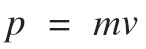
Momentum depends on the object`s mass and velocity.

daum_equation_1381173460689

daum_equation_1381173354922

Momentum is a vector quantity which has units daum_equation_1381173682367

7Oct
Comments Off on Virtual Momentum Investigation.

Wave Practice

Posted by Mr Mallon on September 30, 2013

Try out this revision on parts of a wave.

30Sep
Comments Off on Wave Practice

Mass and acceleration

Posted by Mr Mallon on September 22, 2013

Here is a movie showing how an increase in mass of an object can affect the object`s acceleration.


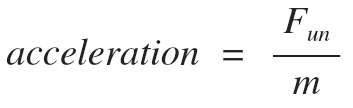
daum_equation_1379859361908

From the above famous equation you can see that an increase in the mass, m, will reduce the acceleration provided the unbalanced force remains the same.

This is why your car will have a smaller acceleration when it is full of passengers than it would have when empty.

22Sep
Comments Off on Mass and acceleration

Elevator Physics

Posted by Mr Mallon on September 22, 2013

Click the start button below to see what can happen to your weight while inside a moving elevator.


Categories: Higher Physics
22Sep
Comments Off on Elevator Physics

Quick Summary Posters For National 4 & 5 Pupils

Posted by Mr Mallon on June 12, 2013

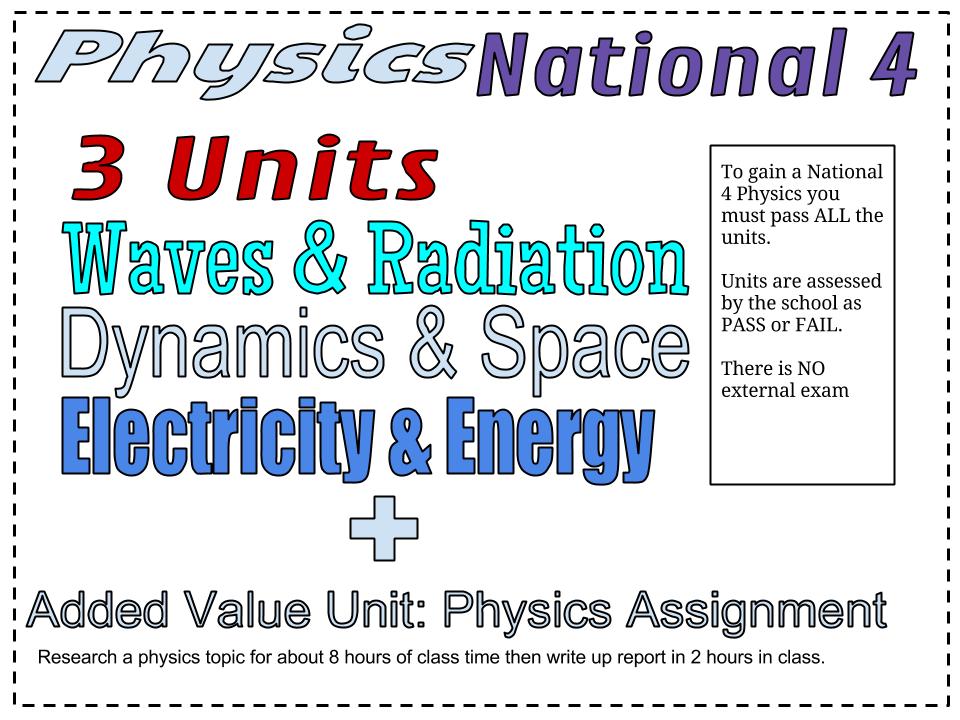
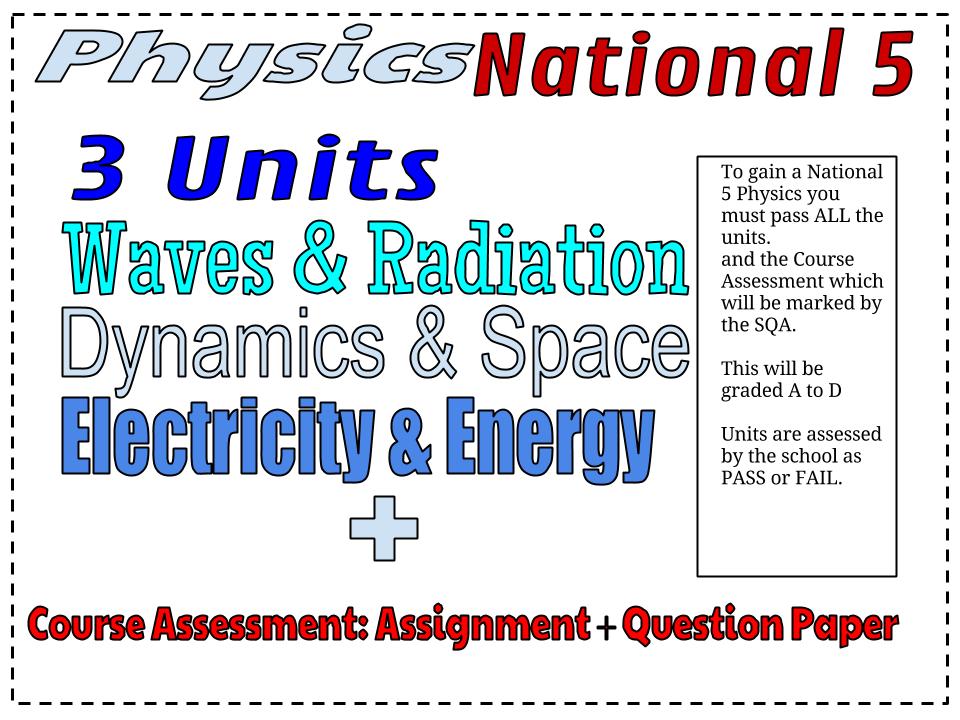
Here are a couple of posters you can download to remind you of what the new National Courses.

National4PupilSummary

Download N4 Course Summary here

National5PupilSummary

Download N5 Course Summary here

12Jun
Comments Off on Quick Summary Posters For National 4 & 5 Pupils

Acceleration

Posted by Mr Mallon on May 29, 2013

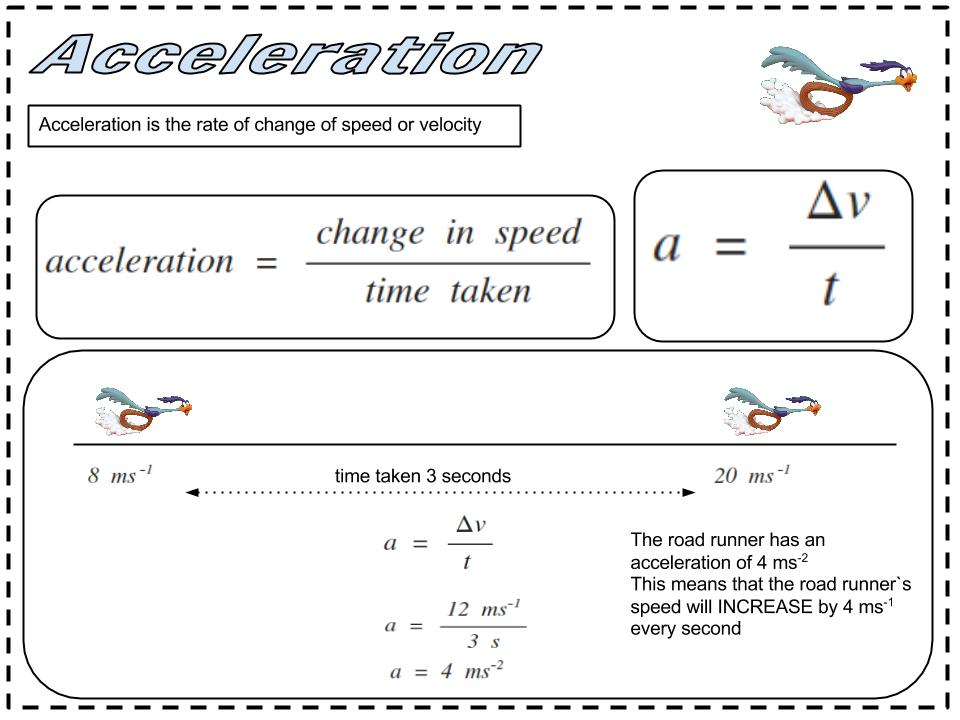
Here is a quick summary poster on acceleration:

AccelerationNote

Download Acceleration Note Poster pdf here.

Categories: Standard Grade
29May
Comments Off on Acceleration

Differential Opamp.

Posted by Mr Mallon on May 23, 2013

Here is the set up for an opamp set to differential mode.

This set up amplifies the difference between the two voltages.

daum_equation_1369347773825

Looking at the input and feedback resistors we have:
daum_equation_1369348006205

Click the green arrows of V2 and V1 and check out that the difference between V2 and V1 is multiplied by 2.

This is an example of a differential amplifier.

Categories: Higher Physics
23May
Comments Off on Differential Opamp.