Gas Properties
Have a go at the brilliant PhET gas laws simulation.
Just click the picture below and run the program.
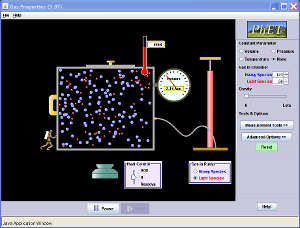
| Click to Run |
Categories: Higher Physics
29Nov
Comments Off on Gas Properties
Have a go at the brilliant PhET gas laws simulation.
Just click the picture below and run the program.
| Click to Run |
Albert is correct. Make sure you do these masterclass revision questions.
Here are the links to the google documents you can print out.
Hi Physics lovers!
Use the simulation above to find the frequency of the passing waves.
Press the UP Green arrow to start the wave motion. Pressing it again increases the wave speed while pressing the down arrow will reduce the speed.
If the waves run out just press the pause button and then the RESET button.
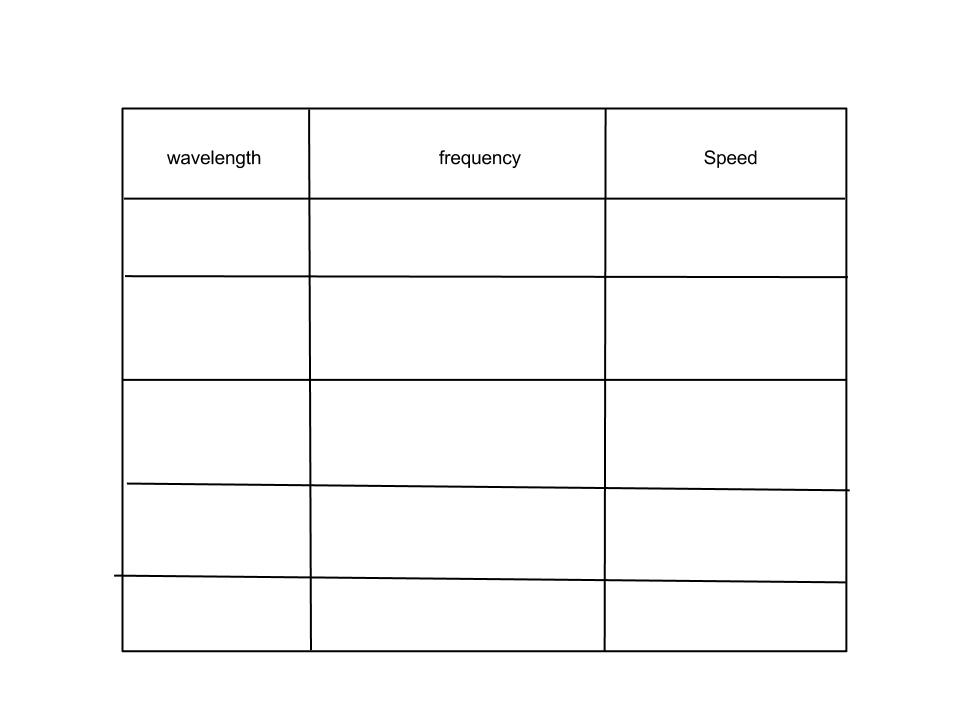
Make up a table with headings wavelength, frequency and speed and take some readings.
Check that wavelength multiplied by frequency is equal to the wave speed.
Use this table:
You can click on it and print it off.
PhET Projectile Experiment.
Use the PhET simulation sheet, there is a link below, to experiment with the cannon.
Download experiment sheet here
Link to PhET projectile site where you can download the virtual experiment or press run to have it on a bigger screen.
What happens to objects on transverse waves?
As the wave passes any object on the wave is moved up and down at right angles to the passage of the wave.
Check out how we can demonstrate this effect with a cut out wave and a piece of card.

Just over forty three years ago, just as this picture was taken, a bleary eyed wee boy was thrilled to the limit watching those grey tv pictures of men walking on the moon.
It is a moment in history that is forever etched into my memory. As I `ve said before in these pages I am eternally grateful to my father for getting me up that wonderful July morning to witness history being made.
Tonight I learned of the death of Neil Armstrong, the first man to walk on the moon.
Neil Armstrong… God`s speed to you!
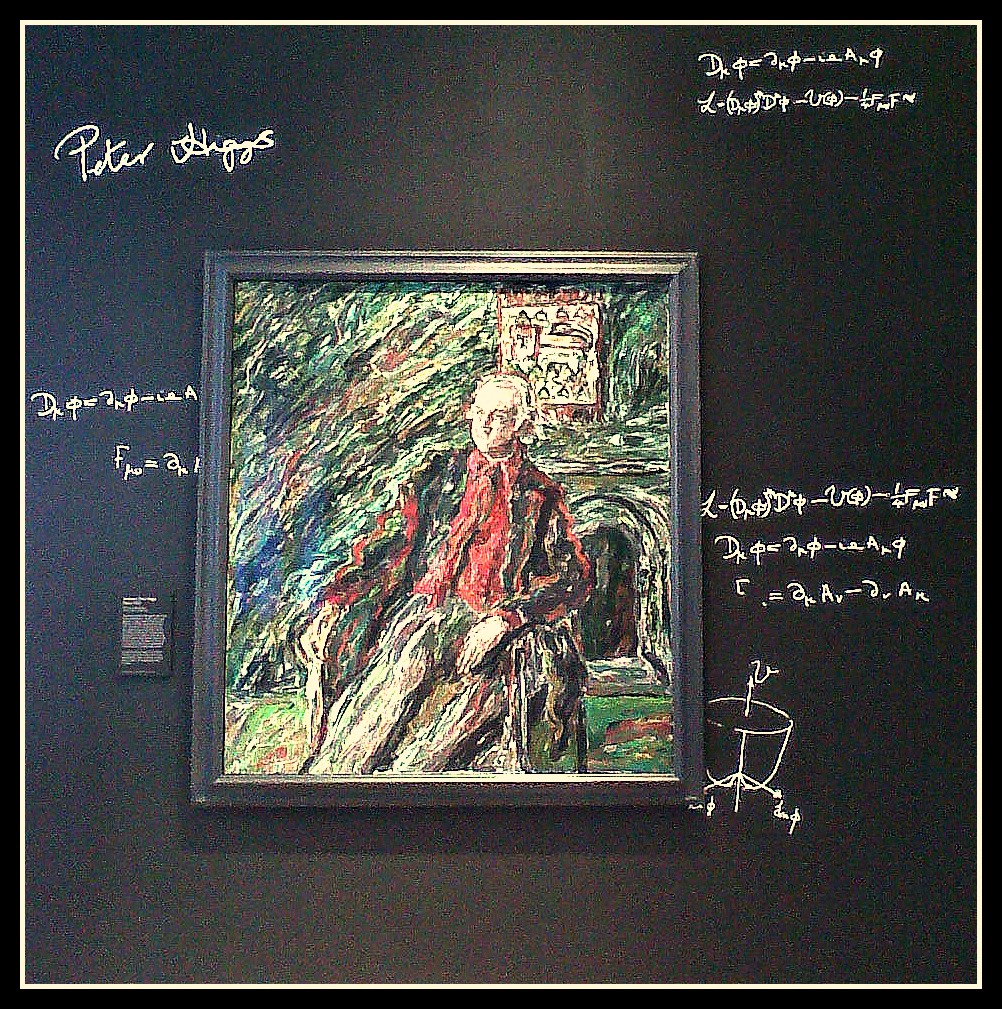
A painting of Professor Peter Higgs at the National Portrait Gallery, Edinburgh.
I think they will need to update the small caption pretty soon as it tells us the Higgs particle is still to be found.
