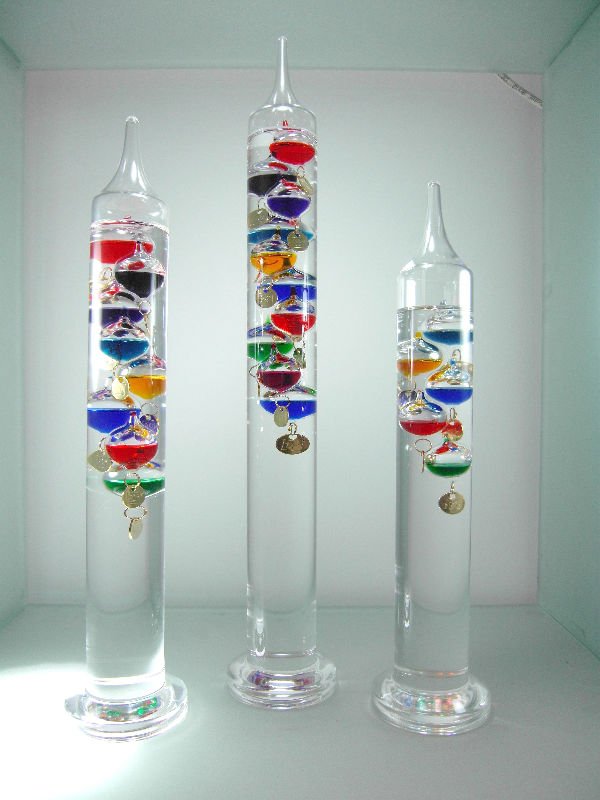
Galileo`s Thermometer.
Find out how they work here
Hi Physics lovers over the next few weeks and after Christmas we will be studying electric circuits.
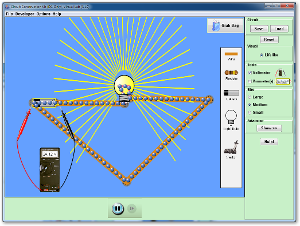
Those brilliant people from PhET have a brilliant virtual circuit builder.
You can download it here and run it on your pc or laptop. You don`t need to be online to use it after it is downloaded.
I will be adding worksheets to build circuits.
As a starter activity build the following circuit.
3 lamps: Change their resistances as shown: 6 ohms, 2 ohms and 1 ohm by right clicking the lamps
2 cells each having a value of 9V
Use non-contact ammeter
also use a voltmeter.
Measure the pd across the cell = 18 volts.
Now measure the pd across each lamp to see if they add up to the cell`s pd.
It is the biggest story in the world of physics. Here is a good infographic to read and impress your science/physics teacher with.

Source:LiveScience
Every year I run a nasty nine physics revision league. I call it Nasty Nine because there are usually nine questions which are not really nasty but only nasty if you haven`t kept up with your physics study.
All the points are toted up and at the end of the year the student with the most points wins a Nasty Nine mug.
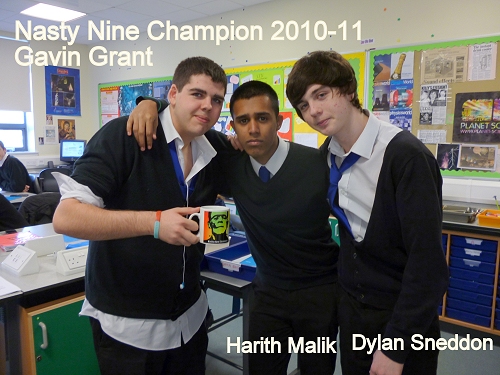
This years winner was Gavin Grant from my Intermediate 2 class. Standing along side him are his colleagues in the class Dylan Sneddon and Harith Malik. Great students.
Here is a video showing you how to find the resultant force of two forces acting on an object.
Hi S3 and S4 physicists. Here is a movie on how to work out wavelengths.
Now try the practice worksheet. Click here to download.
My Higher Physics students explored electric fields today.
Most important fact is that an electric field is a region in space where charged particles like electrons or protons experience a force.
The Electric field can be visualised with arrows. The direction of which tells you the direction a small positive charged particle would experience the electric force.
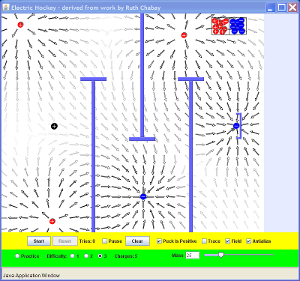
Try this fascinating PhET Simulation called Electric field hockey.
Hi second year scientists.
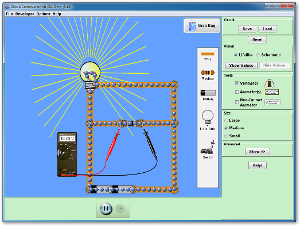
Here is a cracking activity that lets you build your own circuits on your computer.
To go to Circuit Construction click here
Download worksheet here: Exploring Circuits Sheet 1
A super time lapse film of the International Space Station as it flies over the planet.
Look out for the aurora. These are the green bands on the edge of the Earth. You can also see lightning storms and big cities lit up at night.
What a joy to see.
Earth | Time Lapse View from Space, Fly Over | NASA, ISS from Michael König on Vimeo.